Posts

^What is light?

^What is light?

In general light means following three parts

  1. Infra red radiation or thermal radiations
  2. visible light
  3. ultraviolet light,

As these are parts of EM spectrum, thus light is electromagnetic, thus properties of light are same as that of any EM wave. Light can behave like a ray, a wave & as a particle, depending on its interaction with the objects it encounters on its way.

^Electromagnetic Force

^Electromagnetic Force

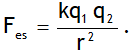
EM – force acts between charged particles. It binds electrons with nuclei to form atoms & binds atoms together to form molecules. It is responsible for the properties of solids, liquids, & gases. Force of attraction/repulsion between two static charges is described by the Coulomb’s law i.e
Electric forces and magnetic forces were considered to be separate forces until the 1860s when James Clerk Maxwell was able to demonstrate that they were different manifestations of the same force – the electromagnetic force. Infact, all contact forces such as: Frictional force (f), Viscous force (Fv), Air drag (fd) Spring force (Fspring or Fr), Normal reaction (N), Tension force in ropes, strings & muscles (T), Buoyant force (B or U), Surface tension force (FS) are actually due to the electromagnetic force.

^Maxwell equations

^Maxwell equations

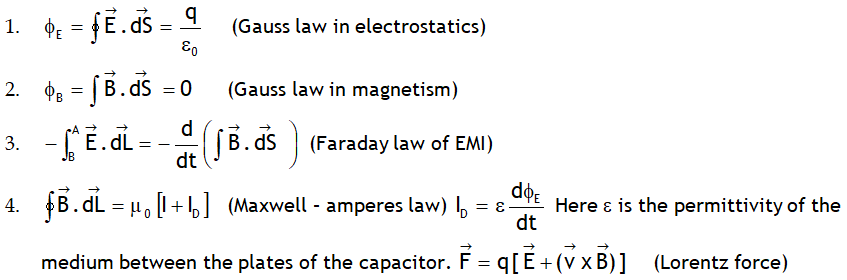
Following five equations give a complete description of all em– interactions and are called Maxwell eq:

^ γ-rays

 – rays

(a) Produced in nuclear reactions and are also emitted by radioactive nuclei (such as Co 60 & Cs 137).

(b) Properties: Effect on photographic plate, fluorescence, ionization, diffraction, high penetrating power & can cause serious damage if absorbed by living tissues.

(c) Used

  1. in radio therapy to treat certain cancers and tumors
  2. to produce nuclear reactions
  3. to study the atomic nuclei.

^Ultraviolet light

^Ultraviolet light

(a) Produced by special lamps like mercury and iron are lamps and by very hot bodies like sun.

(b) Properties: Effect on photographic plate, fluorescence, ionization, highly energetic, tanning of the human skin.

(c) Used

  1. To destroy bacteria and for sterilizing the surgical instruments
  2. In the detection of forged documents finger prints
  3. In burglar alarms etc as they can cause photoelectric effect.
  4. For studying fluorescence
  5. In the study of molecular structure and arrangement of electrons
  6. To prevent the food stuff.

^Visible light

^Visible light

  1. Produced by hot bodies like sun, electric bulbs and tubes etc. as a result of electronic transitions. Our eyes are sensitive to visible light which helps us to collect the information about our surrounding.
  2. Properties: Reflection, refraction, interference, diffraction, polarization, photoelectric effect, photographic action, sensation of sight.

^Infra red waves


^Infra red waves

(a) Also called heat waves & are produced by hot bodies and molecules.

(b) Properties: Heating effect, reflection, refraction, diffraction & propagation through fog.

(c) Used

  1. In taking photographs during the conditions of fog, smoke etc. as these waves are scattered less than visible rays and hence can travel longer distances through atmosphere under fog, smoke etc.
  2. In weather forecasting
  3. In checking the purity of chemicals
  4. In the study of molecular structures
  5. For producing dehydrated fruits
  6. In green houses to keep the plants warm
  7. To provide electrical energy to satellites using solar cells.
  8. To treat muscular strain.
  9. In solar water heaters and cookers.

^Radio waves

^Radio waves

(a) Produced by the charges accelerating through LC oscillators.

(b) Properties: Reflection, diffraction

(c) Used for wireless communication purposes, like transmission of radio and TV signals and cellular phones.

^Radiation pressure

^Radiation pressure

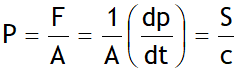
The force exerted by electromagnetic wave on unit area of the surface is called radiation pressure (P). It is defined as

If an EM wave of energy U incident normally on a surface of area A then the radiation pressure exerted by the EM wave on the surface is

^Linear momentum of the EM wave

^Linear momentum of the EM wave

EM waves carry energy and momentum. If a portion of EM wave of energy U propagates with speed c, then linear momentum of the EM wave is

error: Content is protected !!
Call 9872662552