Posts

^Accuracy & Precision

^Accuracy & Precision

The accuracy of a measurement is a measure of how close the measured value is to the true value of the quantity. Precision tells us to what resolution or limit the quantity is measured.

For example, suppose the true value of a certain length is near 3.678 cm. In one experiment, using a measuring instrument of resolution 0.1 cm, the measured value is found to be 3.5 cm, while in another experiment using a measuring device of greater resolution, say 0.01 cm, the length is determined to be 3.38 cm. The first measurement has more accuracy (because it is closer

to the true value) but less precision (its resolution is only 0.1 cm), while the second measurement is less accurate but more precise.
^Power transferred theorem

Power transferred theorem

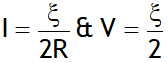
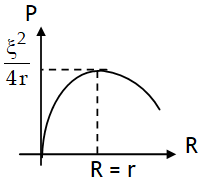
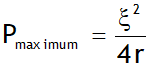
The power transferred by a cell to the load is maximum when R = r & given by

Also then

^What is a Tensor? 

^What is a Tensor?       

A physical quantities which have no specified direction but different values in different directions are called tensors.

Stress, Strain, Density, dielectric constant, refractive index, electrical conductivity, electrical resistivity, moment of inertia etc are tensors. These quantities are taken as tensors at microscopic level & scalars macroscopically.

Following practical units of length are commonly used:

*A quantity having dimensions must posses some units, where as dimensionless quantity can have units. e.g. angle.

Facts

  • *A quantity having dimensions must posses some units, where as dimensionless quantity can have units. e.g. angle.

Relative velocity have same dimensions as that of velocity where as relative density is dimensionless.

*Principle of homogeneity

*Principle of homogeneity

According to principle of homogeneity of quantities (PHQ) only those quantities can be added or subtracted which have same physical nature.

e.g. Force can’t be added in velocity, similarly or distance can’t be subtracted from time.

Also according to PHQ: L + L = L and L – L = L

L + T = not possible and T – M = not possible.

However there is no restriction on multiplication or division i.e. quantities having same or different dimensions can be both multiplied as well as divided. e.g. v = x/t, F = m.a, P = F/A, W = F.x etc.


^One radian

^One radian

One radian (rad) is the angle subtended at the centre of a   circle by an arc of length equal to the radius of circle.

*Geometrical Meaning of integration

*Geometrical Meaning of integration

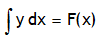
is called Integral or primitive of y w.r.t. x or anti-differentiation.
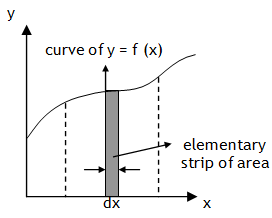
Here, ydx is area of elementary rectangular strip of thickness dx.

Thus gives the total area bounded by the all the elementary strips of the curve represented by the function

y = f (x) with the x-axis between the limits x = a to x = b. As convention upward areas are taken as positive and downward area negative.

^Charge is source of field

Charge is source of field

  1. An electric charge at rest produces only electric field around it.
  2. An electric charge moving with uniform velocity produces both electric and magnetic fields around it but radiates no energy.
  3. An accelerated charge produces both electric and magnetic fields around it as well as radiates energy in the form of electromagnetic waves.

*Right handed or left handed parabola

*Right handed or left handed parabola

A quadratic of the form x = ay2 + by + c represents an right handed or a left handed parabola, it can also be expressed by the following function

(y – v)2 = L (x – u)

Here (u, v) represent coordinates of vertex (V) of a parabola. L= +ve for right handed parabola &

L = – ve for a left handed parabola.

*Straight line      Function y = m x + c represents a straight line cutting + y at acute angle to +x.

*Straight line     

Function y = m x + c represents a straight line cutting + y at acute angle to +x.

m = tanq is called slope of the line.

q = anticlockwise angle made by the line with + x axis.

m = +ve if line makes acute angle to +x.

m = 0 if line is horizontal.

m = – ve if line makes obtuse angle to +x.

c = +ve if line cuts +y.

c = – ve if line cuts -y.

c = 0 if line passes through origin.

error: Content is protected !!
Call 9872662552