Posts

^Dielectric constant

Dielectric constant

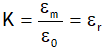
Dielectric constant is also called relative permittivity or specific inductive capacity & is defined as

K = 1 (air or vacuum), K = 81 (water),

K = ∞ (metals), K = 0 (insulator)

Dielectric constant decreases on heating.

*Graph of logarithmic function

*Graph of logarithmic function

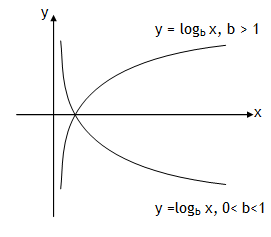
The function y = logb x is called a logarithmic function, it is not defined for x ≤ 0.

It is a decreasing function for 0 < b & increasing for b > 1.  The y – axis is an asymptote of the curve

y = logb x. The x intercept is the point (1, 0).

*Up or down parabola  

*Up or down parabola

A quadratic of the form y = ax2 + bx + c represents an upward or a downward parabola, it can also be expressed by the following function

(x – u)2 = L (y – v)

L= +ve for upward parabola & L = – ve for a downward parabola.

*Shape of y versus x graph

*Shape of y versus x graph

Let a physical quantity y depends on other physical quantity x, this dependence is called a mathematical function & usually expressed as

y = f (x) (read as y is a function of x).

The dependence of y on x can be visualised by drawing a graph of function y = f (x). While plotting graphs the independent varaible is taken on horizontal line & dependent on vertical line. Shape of y versus x graph depends on the type of function.

Following types of y versus x graphs are frequently encountered in Physics.

*Laws of log

*Laws of log


*Componendo & dividendo

*Componendo & dividendo

*Bounded functions

*Bounded functions

If a function attains finite values only, then it is said to be bounded otherwise unbounded.

Only sinθ & cosθ are bounded functions, secθ, cosθ, tanθ & cotθ are unbounded.


*Transformation formulae sinA + sinB = 2sinC cosD

*Transformation formulae 

sinA + sinB = 2sinC cosD

sinA – sinB = 2cosC sinD

cosA + cosB = 2cosC cosD

cosA – cosB = – 2sinC sinD

^A long horizontal fixed wire carries a current of 100 A. Directly above and parallel to it is another wire carrying a current of 20 A and weighing 0.04 N/m.

^A long horizontal fixed wire carries a current of 100 A. Directly above and parallel to it is another wire carrying a current of 20 A and weighing 0.04 N/m. The separation between the two wires so that the upper wire is just supported by the magnetic repulsion is

error: Content is protected !!
Call 9872662552