^Galvanometer
Galvanometer
A current carrying coil placed in a magnetic field experiences a torque & deflects.
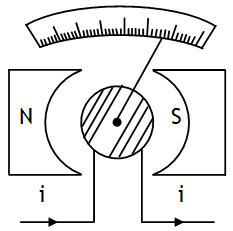
This deflection is calibrated to measure current flowing in it. Used to detect & measure only small currents of the order of microamperes. Current sensitivity (Is): It is defined as the deflection produced for a unit current. i.e. 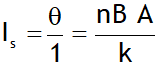 . Is can be increased by increasing B or by decreasing k (by taking quartz or phosphorous bronze). Reciprocal of current sensitivity is called ‘figure of merit’. As we have discussed that a galvanometer fails to measure currents I > Ig. In order to measure currents I > Ig we use an Ammeter.


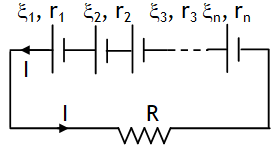
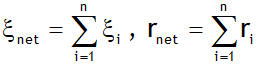
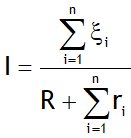


 = constant called electrical resistance R, provided there is no change in the physical conditions like temperature, pressure & impurity etc.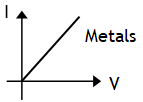
 = (Microscopic version) i.e. conductivity of a conductor is independent of electric field existing in the material over a wide range of field.
 e. a capacitor of smaller capacitance will get more potential difference & vice versa.
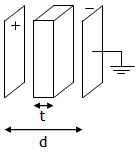
 between the capacitor plates the dielectric gets polarized & an electric equal to E0 is induced in it, as a consequence net electric field in dielectric is found to be zero i.e. Enet = 0.